


Protect the people you care about most
Writing a Will is one of the kindest things you can do for your loved ones. It’s not just about leaving gifts and inheritance. A Will gives your family peace of mind that they’re carrying out your wishes, and it avoids confusion, and second-guessing, and potential disagreements.
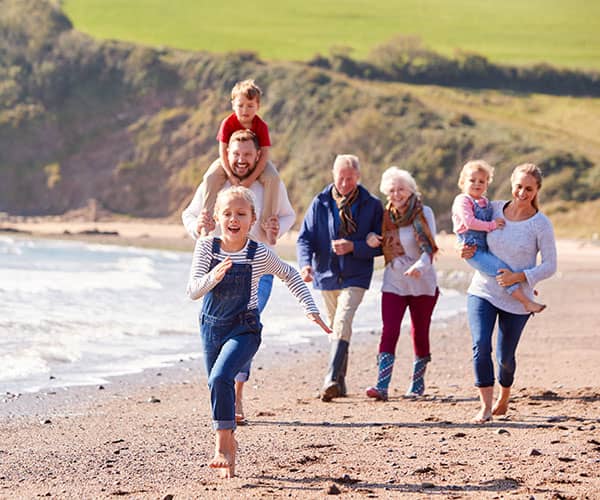
Provide for your loved ones
Of course, one of the primary reasons for making a Will is to set out which assets your friends or family will inherit from your estate.
Your assets include things like:
- Your home and any other property you own, in the UK or abroad
- Savings and investments
- Your pension pot
- Cars and other vehicles
- Valuable possessions like jewellery
- Any insurance policies
You may also choose to leave something to a charity, club or society, or a political party.
What happens if you don’t make a Will?
If you die without making a Will, the rules of intestacy will apply to distribute your estate.
How the rules apply depends on whether you’re married or in a civil partnership, if you have children, and whether you have any other surviving family members. If you have no family left, your estate passes to the Crown.
When the rules of intestacy apply, you run the risk of leaving nothing to some of your closest friends and family, simply because they didn’t qualify under the rules.
Even if you are happy with the order of distribution, you may want to apportion the assets differently.
In any event, handling an estate under the rules of intestacy is a much longer process, and often causes stress and confusion for your executors. It can even lead to legal action if disgruntled family members are excluded.

Planning for inheritance tax
Lots of people worry about inheritance tax, but in reality few people pay it. With effective estate planning, you can reduce your tax burden and leave more to your beneficiaries.
Inheritance tax is charged at a rate of 40% on everything over the £325,000 threshold in your estate. However, there are a number of exemptions, and strategies that increase this threshold so that less of your estate is taxable.
It all depends on your circumstances. When we have our first meeting, I’ll talk your through the best options for you.
Making a Will: the process
So what’s involved in making a Will? If you’re doing it for the first time, it’s often helpful to know a bit about the process before you begin.
- Full consultation: At the full consultation we’ll prepare an excel spreadsheet or all your assets and liabilities. We’ll also put together your family tree, and make a list of key people in your life and their dates of birth. You can explain to me where you want your assets to go, and name your executors. We’ll also discuss any specific needs such as children under 18, disabled family members, or lasting powers of attorney.
- First draft: I draft your Will and email it to you for review. I can send the draft document in the post if you prefer.
- Final version: I’ll make any changes you need and once you’re happy I’ll send you a final document in the post, or deliver it by hand.
- Signing and attestation: Your Will is now ready to be signed. I offer a free attestation service that supervises the signing and witnessing of the final document at home. Alternatively, you can follow the 'How to sign a Will' instructions sent with your final document.
This is just a brief guide to give you an idea. I’ll walk you through everything in our first meeting and explain how the process will work for you, step-by-step.